
Liology – The Study of Nature’s Patterns

“the asymmetrical, nonrepetitive, and unregimented order which we find in the patterns of moving water, the forms of trees and clouds, of frost crystals on the window, or the scattering of pebbles on beach sand.” Alan Watts
- fixed patterns
- dynamic patterns
- patterns within patterns
- patterns in time
- patterns in space
- patterns that we create in our own minds through our unique perceptions of these patterns
Li refers to the natural patterns of the universe that are continually forming and re-forming around us. These are both fixed and dynamic patterns, patterns within patterns, patterns in time, and patterns in space, along with patterns that we create in our minds through our unique perceptions of these external patterns.
The li can be thought of as the ever-moving, ever-present set of patterns that flow through everything in nature and in all our perceptions of the world, including our own consciousness.
Alan Watts describes the li as “the asymmetrical, nonrepetitive, and unregimented order which we find in the patterns of moving water, the forms of trees and clouds, of frost crystals on the window, or the scattering of pebbles on beach sand.” [1]
In the words of the Neo-Confucian philosopher Zhu Xi: “This li moves in the world in continuous cycles without a single moment’s cessation. None of the myriad things and activities – be they small, large, fine, or coarse would have been possible without the ever-flowing presence of li in them. So is my mind (heart), which also receives it. The li never ceases to stay in my mind for a moment; its creative process never ceases to reciprocate with the physical world.” [2]
The li was understood by Neo-Confucian philosophers as the universal set of manifestations of the Tao. Their leading philosopher, Zhu Xi, said: “The word ‘Tao’ is all-embracing, while the Li are so many veins inside the Tao… The Tao is vast and large. The Li is minute and detailed.” [3]
Li and Systems Theory
The celebrated systems thinker Gregory Bateson, who is regarded by some as a founding figure in cybernetics and dynamical systems theory, once famously wrote in one his books the following:
What is the pattern which connects all the living creatures? …
My central thesis can now be approached in words: The pattern which connects is a metapattern. It is a pattern of patterns. It is that metapattern which defines the vast generalization that, indeed, it is patterns which connect. [4]
In recent times, some Chinese scholars suggest translating the word “li” as coherence – emphasizing how the patterns that connect the qi are those which give it coherence. [5]
The word “li” is incorporated into the word “liology,” which therefore means literally “the study of the organizing principles of the universe.”
BASE Scientific Engineered with Li Patterns
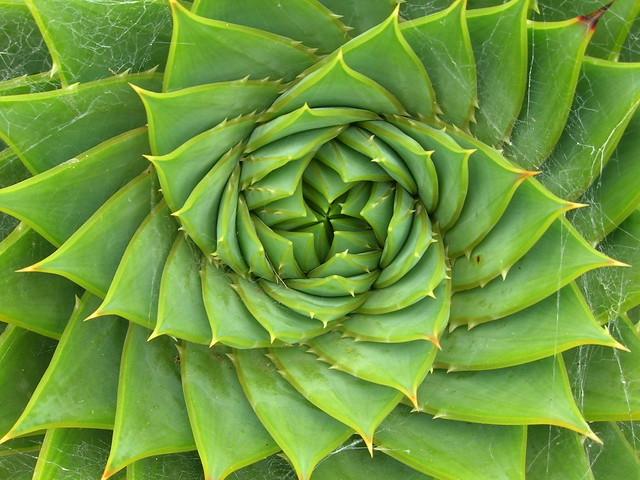
In the 1980s, manufacturing processes were so rigid, so hopelessly lost in symmetry research and development engineers like my father were restricted to innovate “inside the box,” literally. Fast forward to the twenty-first-century, manufacturing has advanced beyond symmetrical limitations, allowing the inventor to experiment with various hyperbolic form factors.
On our lamps page, prototype lamp designs are radically different than conventional lamps. The shape of the lamp plays a vital role in achieving the goal of producing high-resolution adjustable spectrums from plasma and using point source field physics to generate heat from coherent light, similar to how lasers are designed.
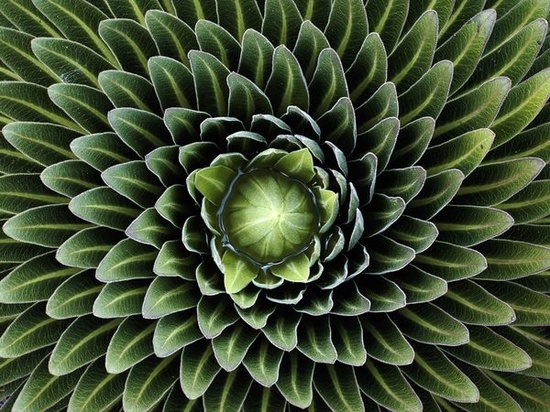

The global scientific community continues to debate the nature of light. The conventional scientific group claims light is a wave, and the quantum scientific group suggests light is a particle. Einstein suggested light contains both properties of waves and particles. As these debates continue, my approach is real-world experimentation and proof of concept.
Utilizing Nature’s patterns as my guide and the insights from my father, we have achieved a novel design approach to horticulture lighting and recently produced light to generate heat rather than the archaic method of resistive wire.
The implication of the environmental benefits of our lamp designs is the increase in efficiency and quality of the light spectrum. Our plasma lamp technologies produce light from the same method as our Sun produces light. Plants have yet to reach their full potential with conventional in-door lamp designs as they are a single-spectrum design. Light Emitting Diodes are excellent for headlights and emergency vehicles; however, the frequency rate of LEDs is obtrusive, which introduces stress factors to the plants.
Our plasma lamps, designed to heat the air and liquids, use dramatically less power than inefficient resistive wire. Upgrading to our lamp technologies will greatly reduce your electrical consumption in your home and in your greenhouses.
Notes
[2] Cited in Yu, D. (1980). “The Conceptions of Self in Whitehead and Chu Hsi.” Journal of Chinese Philosophy, 7(1980), 153-173
[3] Cited in Angle, S. C. (2009). Sagehood: The Contemporary Significance of Neo-Confucian Philosophy. New York: Oxford University Press, 42-3.
[4] Bateson, G. (2002). Mind and Nature: A Necessary Unity. Cresskill, New Jersey: Hampton Press, 7, 10.
[5] See Angle, op. cit.
